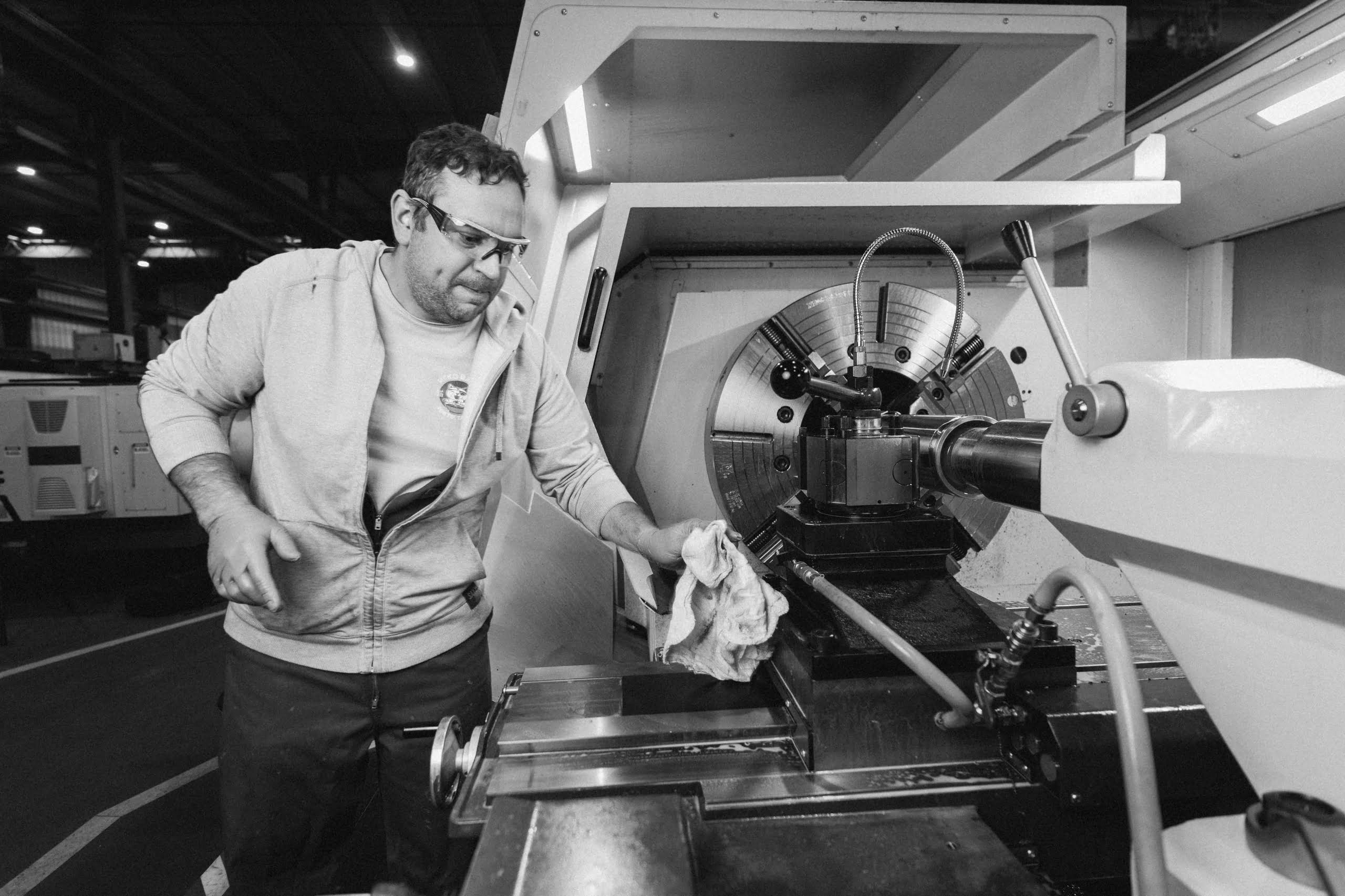
Boring and honing are precision processes used to create or improve internal cylindrical surfaces. They are often discussed together, but they perform different roles. Boring removes material to establish or enlarge a bore, while honing uses abrasive action to refine size, geometry and surface finish.
For hydraulic, oilfield, mining, marine and industrial components, the internal bore may be one of the most functionally important features. Its diameter, straightness, roundness and texture can influence sealing, friction, wear, alignment and service life.
What Is Boring?
Boring enlarges and trues an existing hole using a cutting tool. It can correct location, improve alignment and establish a more accurate diameter than the preceding drilling operation.
Conventional boring can be performed on lathes, mills and boring machines. Long or deep bores may require specialized systems designed for chip evacuation, tool support and straightness control.
What Is Pull Boring?
In pull boring, the cutting tool is drawn through the bore rather than pushed. The method can support stable cutting and accurate internal geometry in long components when applied with suitable equipment and process design.
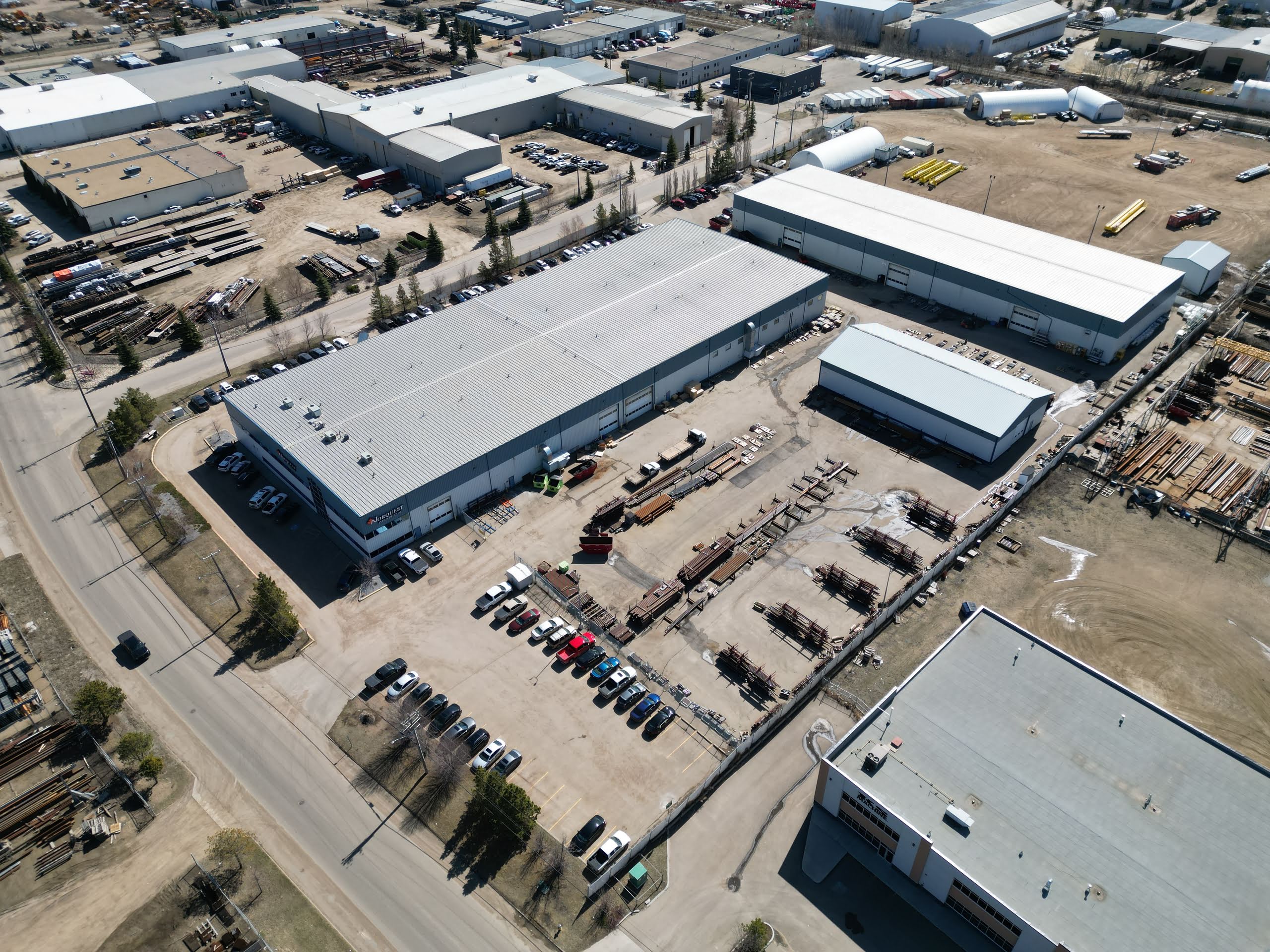
Norquest’s ID processing capability includes computerized deep-hole drilling, pull boring and honing for bores up to the published equipment limits.
What Is Honing?
Honing uses abrasive stones that contact the bore while rotating and reciprocating. The process removes small amounts of material and can improve size, roundness, straightness and surface texture.
Honing is generally a finishing process rather than a method for removing large stock allowances. The starting bore must have enough material for correction but should be reasonably close to the intended geometry.
Boring vs Honing
The processes are complementary. Boring establishes the bore efficiently; honing refines it.
- Boring uses a defined cutting edge and removes more material
- Honing uses abrasives and removes a smaller finishing allowance
- Boring can improve location and establish diameter
- Honing is especially effective for surface finish and geometric refinement
- Some parts require boring only, while critical bores may require both
Why Bore Geometry Matters
A bore can meet diameter at a few points while still being tapered, barrel-shaped, hourglass-shaped, lobed or out of straightness. These conditions may affect seals, bearings, pistons or mating components.
The drawing should define the characteristics needed for function. Inspection methods must be capable of detecting the relevant form error, not only a single diameter reading.
Surface Finish and Crosshatch
Honing can create a controlled surface texture. In some applications, the pattern supports lubrication retention and seal performance. The required roughness and texture depend on the mating system and should be specified by the design authority.
An overly rough surface can accelerate wear or damage seals, while an unsuitable smooth surface may not retain lubricant as intended.
Applications for Boring and Honing
Precision internal finishing is used where long, accurate or functional bores are required.
- Hydraulic cylinders and actuator components
- Oilfield tools and pressure-related components
- Bearing and seal housings
- Mining and heavy-equipment components
- Marine shafts, sleeves and mechanical systems
- Industrial machinery and custom assemblies
Inspection of Precision Bores
Bore diameter may be verified with air gauging, bore gauges, CMM methods or specialized equipment, depending on size and tolerance. Straightness, roundness and surface finish require appropriate methods and sampling locations.
Norquest combines ID processing with quality assurance, precision gauging, surface-finish measurement and documented inspection.
Information to Include in an RFQ
Long-bore work should be quoted using complete technical requirements.
- Starting material and initial-hole condition
- Finished diameter and tolerance
- Bore length and overall component size
- Straightness, roundness and cylindricity requirements
- Surface-finish and texture requirements
- Concentricity or positional relationship to external features
- Inspection and reporting requirements
- Quantity, delivery and preservation needs
Frequently Asked Questions
Can honing correct a badly misplaced hole?
Honing primarily refines the existing bore and removes limited stock. Significant location error generally requires another machining strategy.
Is honing the same as grinding?
Both use abrasives, but honing uses a distinct tool motion and contact pattern optimized for internal geometry and finish.
How long a bore can be honed?
Capacity depends on the specific equipment, diameter, component and tolerance. Norquest publishes its current ID-processing limits on its service page.
Improve Bore Accuracy and Surface Performance
Norquest offers deep-hole drilling, pull boring and honing supported by machining, engineering and inspection under one quality system.
Submit your bore specifications through the contact page for a capability review.
about
avada factory
Sempery ultricies nibh at dolor cras urna eleifend nec. Atiam efficitur tempor.